Love and control can appear similar at first glance. Both involve attention. Both involve closeness. Both may even involve strong emotion. Yet beneath the surface, they are fundamentally different forces. One nurtures freedom. The other restricts it.
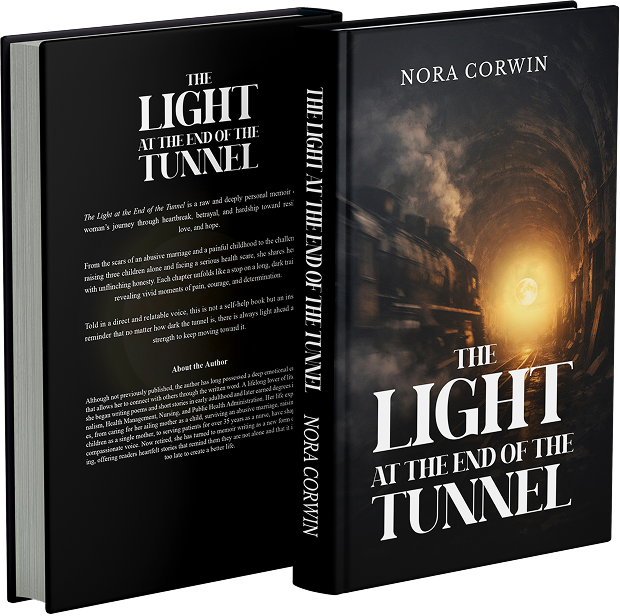
In The Light at the End of the Tunnel by Nora Corwin relational tension often reveals the subtle line between devotion and domination. Recognizing that difference is essential for emotional health and long term stability.
Love is rooted in respect. It acknowledges the individuality of the other person. It allows space for independent thought, friendships, ambitions, and personal growth. Control, by contrast, is rooted in insecurity. It seeks reassurance through restriction rather than trust.
A loving partner supports your autonomy. A controlling partner questions it.
Control often disguises itself as protection. Statements such as “I just worry about you” or “I know what is best for you” may sound caring. Over time, however, these phrases can become tools for limiting choice. If one partner consistently dictates social interactions, clothing, finances, or career decisions, the relationship is no longer balanced.
Love invites dialogue. Control shuts it down.
In healthy relationships, disagreement is permitted. Two individuals can hold differing opinions without fear of retaliation. Control reacts differently. It may respond with anger, silent treatment, guilt, or emotional withdrawal when challenged. The message becomes clear. Compliance ensures peace. Resistance creates punishment.
Another distinguishing factor is accountability. Love admits mistakes. It apologizes sincerely and seeks repair. Control deflects blame. It reframes events to maintain dominance and may even accuse the other person of causing the conflict.
Jealousy also reveals the divide. Mild insecurity can be expressed openly and addressed constructively. Controlling jealousy escalates into surveillance, interrogation, or isolation from friends and family. Love trusts and communicates. Control monitors and restricts.
Emotional safety serves as the clearest indicator. In loving relationships, you feel free to express thoughts without walking on eggshells. You do not fear that your words will be twisted or used against you. In controlling dynamics, self-censorship becomes routine. You measure your responses carefully to avoid triggering tension.
Financial behavior may also signal imbalance. Transparency and shared decision making reflect partnership. Secrecy, withholding resources, or using money as leverage reflect control.
Control thrives on dependency. If one partner consistently undermines the other’s confidence, discourages outside support, or creates scenarios where leaving feels impossible, the pattern becomes dangerous. Love strengthens capability. Control weakens it.
It is important to note that control is not always loud. It can be subtle and gradual. Over time, the person being controlled may not immediately recognize the shift. They may interpret restrictions as signs of intense affection. Only later does the loss of freedom become clear.
Self-reflection is essential. Ask whether your relationship expands or shrinks your world. Do you feel encouraged to grow, or pressured to conform? Do disagreements lead to understanding, or to intimidation?
The Light at the End of the Tunnel illustrates that love does not demand surrender of identity. It thrives alongside it. When respect, trust, and shared responsibility are present, connection deepens naturally.
The difference between love and control is ultimately measured by freedom. Love allows you to remain fully yourself while choosing to stay. Control attempts to shape you into someone easier to manage. One builds partnership. The other builds dependency.
Visit my Profile : https://allauthor.com/author/noracorwin/